
Jharkhand's Finance Minister has ordered a statewide investigation into alleged fraudulent salary withdrawals from government treasuries, following reports of irregularities in multiple districts.

An accountant in Bokaro district, India, has been arrested for allegedly embezzling over Rs 6 crore from the treasury's salary disbursement account. Investigations are ongoing to determine the full extent of the fraud.

Rahul Gandhi accuses the government of using the women's reservation bill as a smokescreen to manipulate India's electoral map and diminish representation for certain states.

He said the new short-term treasury bills will be part of the government's same borrowing programme. To meet its burgeoning expenditure, necessitated by the slowing down economy, the government has pegged its market borrowing at over Rs 4.5 lakh crore (Rs 4.5 trillion) for the current fiscal, bulk of which is being raised in the first half.

US President Donald Trump's signature will soon appear on US paper currency, coinciding with the 250th anniversary celebrations of American Independence.

TVK founder Vijay, upon becoming Chief Minister, approved free electricity units and special forces for women's safety and anti-drug efforts. He pledged a commitment to secularism and social justice, asserting his authority as the sole power centre.

A special audit by the Comptroller and Auditor General (CAG) has revealed that Odisha's forest and environment department sidestepped central guidelines, procuring and customising Mahindra Thar SUVs worth 17 crore from the State Disaster Response Fund (SDRF) for forest protection, despite the funds being earmarked for 'preparedness and capacity building'.

Congress leader Rahul Gandhi, who made "number 16" jibe at the treasury benches during his speech in Lok Sabha on Friday on three new bills, refused to elaborate on it in his brief interaction with reporters and said "it is a puzzle" and he "won't tell the answer just like that".

IRCTC is expanding its payments arm, IRCTC Payments, to handle transactions across its ticketing platform and tap government clients, aiming to scale its annual payment processing to approximately 1 trillion.

The United States has announced it will not renew sanctions exemptions for the purchase of Russian and Iranian oil, ending a 30-day waiver that allowed some countries, including India, to continue importing Russian oil despite sanctions related to the Ukraine war.

Investors with a 6 to 12 month horizon may consider them. They should align their holding period with the fund's maturity profile and prefer schemes with a lower expense ratio.

The Congress party has accused the government of scheduling a 'special session' to pass bills related to women's quota and delimitation with the intention of gaining political advantage in the upcoming West Bengal and Tamil Nadu elections, calling it a violation of the model code of conduct.
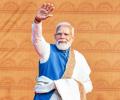
The passing of bills without Parliament, including the treasury benches, having any real understanding of what they contained through any rigorous process has accelerated through the Modi era, points out Aakar Patel.

The Rajya Sabha witnessed a heated debate between the opposition and the government regarding a discussion on the West Asia crisis, with accusations of political maneuvering and failure to uphold the dignity of parliamentary positions.

The contraction in total reserves was driven by a fall in gold reserves, which dropped $13.49 billion to $117.19 billion during the reported week.
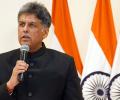
Congress MP Manish Tewari has introduced a bill in Lok Sabha that seeks to allow parliamentarians to take an independent line in voting on bills and motions other than those affecting the government's stability in a bid to free them from "whip-driven tyranny" and promote "good lawmaking".

Gold prices surged by Rs 4,000 to touch an all-time high of Rs 1,37,600 per 10 grams in the national capital on Monday, tracking firm global cues, according to the All India Sarafa Association. The precious metal of 99.9 per cent purity had closed at Rs 1,33,600 per 10 grams on Friday.

Indian refiners are negotiating for additional crude cargoes from the US, Russia, and West Africa to ensure adequate supplies amid Middle East tensions. Refineries are maintaining normal processing rates and deferring maintenance to build reserves. The move comes as conflict impacts tanker movements through the Strait of Hormuz, a key energy transit route.

'They are positioned as defensive products and can potentially give marginally higher returns than liquid funds.'

Earlier, such entities were only permitted to invest their rupee surplus balance in accounts in central government securities, including treasury bills. "It has now been decided to also permit investment of these balances in non-convertible debentures/bonds and commercial papers issued by an Indian company," the RBI said.

A 500 per cent tariff would effectively shut out India's goods and services exports to the US.

In the wake of the FTA between India and the European Union, the United States has described the Europeans as 'very disappointing', saying they were unwilling to join Washington, DC in putting tariffs on New Delhi for its purchases of Russian oil because of this trade deal.

'Even if it is defeated and the Speaker remains, the Opposition parties that have lost faith in his impartiality will continue to have that feeling.' 'If the Speaker reflects on this and tries to be more neutral, more impartial, more objective in his conduct -- then one can say the resolution had a salutary effect. That would be the best outcome.'
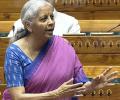
The Lok Sabha on Tuesday passed the Finance Bill 2025, along with 35 government amendments, including one that abolishes a 6 per cent digital tax on online advertisements.

Water conservationist Rajendra Singh blames corruption and faulty infrastructure for the contaminated water crisis in Indore, which led to multiple deaths. He criticizes the city's reliance on the Narmada River and the lack of responsible water management.

'Grassroots-level corruption, which disrupts the last-mile work, cannot be ignored in your enthusiasm and drive to get going to complete the project.' 'Like it was in MGNREGA, in some states, it is the case with the Jal Jeevan mission.' 'The last minute levels of corruption can ruin the intent of the project itself.' 'When you see that people can game a particular well-intended and well-crafted project, you need to correct that.'
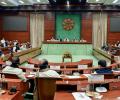
Opposition parties in India are demanding a discussion on the Special Intensive Revision (SIR) of electoral rolls and national security in the upcoming Winter Session of Parliament. They raised concerns about federalism, national security, and the purity of voter lists during an all-party meeting.

The rupee breached 90-levels against the greenback for the first time on Wednesday, falling 6 paise to 90.02 in early trade, as banks kept buying US dollars at higher levels and FII outflows continued.

The Lok Sabha witnessed chaotic scenes as opposition members protested the introduction of three draft laws, leading to torn bills, sloganeering, and adjournments.

The rupee is undervalued as compared to its peers, shows the latest data from the Reserve Bank of India (RBI), even as the local currency keeps hitting new lows.
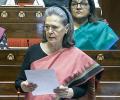
Congress Parliamentary Party chairperson Sonia Gandhi has criticized the Waqf (Amendment) Bill, calling it a 'brazen assault' on the Constitution and part of the BJP's strategy to keep society in a 'permanent state of polarization.' She also spoke out against the One Nation, One Election Bill, calling it a 'subversion of the Constitution.' Gandhi further accused the Modi government of ignoring the women's reservation bill and other demands for reservation, and of 'dragging the country into an abyss' where the Constitution will only exist on paper. She also criticized the government for limiting the speaking time of the Leader of the Opposition in Parliament and for not allowing discussions on important issues like the working of the defense and external affairs ministries and the challenges posed by China on the border.
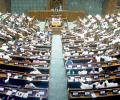
Parliament's approval of the Waqf (Amendment) Bill, a contentious piece of legislation aimed at reforming Waqf bodies, has sparked strong reactions from the opposition, who allege that the bill was "bulldozed" through Parliament. The bill, considered the government's most consequential legislation in its third term, was passed with comfortable majorities in both the Lok Sabha and Rajya Sabha despite opposition claims of a lack of consultation and an intrusion into religious affairs. Other notable bills approved during the session included the Finance Bill, Appropriation Bill, Immigration and Foreigners Bill, and Tribhuvan Sahkari University Bill. The session, which saw high productivity, also witnessed debates on issues such as economic distress, delimitation, and the three-language policy. While the government touted its achievements, the opposition criticized the government's approach and vowed to challenge the Waqf bill in court.

Tamil Nadu Chief Minister and DMK president M K Stalin announced that his party will file a case in the Supreme Court against the Waqf Bill passed in the Lok Sabha. The opposition AIADMK expressed solidarity with the DMK's stance, while the BJP members staged a walkout from the Assembly in protest. The CM argued that the amendment was passed at the behest of a few allies despite opposition from majority parties and that it is an attack on the Constitution and religious harmony. The DMK claims the bill threatens the autonomy of the Waqf Board and the Muslim minority population.

Finance Minister Nirmala Sitharaman on Saturday presented Union Budget 2025-26, envisaging an expenditure of Rs 50,65,345 crore, an increase of 7.4 per cent over the current fiscal.

The Lok Sabha, India's lower house of Parliament, will debate the contentious Waqf (Amendment) Bill on Wednesday. The bill has been met with strong opposition from several parties who claim it is unconstitutional. The government, however, insists the bill aims to improve the management of Waqf properties in India by bringing transparency and efficiency.
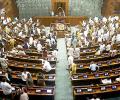
The Monsoon session of Parliament concluded after facing disruptions and protests over the revision of electoral rolls in Bihar. Despite the disruptions, the government managed to pass key legislations.

The liquidity will move into deficit after advance tax payments and GST outflows. It will rebound in October because of government spending.

Yes, the entry of private bankers, particularly with global experience will add value to PSBs, points out Tamal Bandyopadhyay.
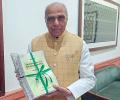
'They want to snatch the land and give it to their friends'

The Indian economy could remain less affected by global trade wars than other countries because the two engines of domestic growth - consumption and investment - are likely to face a limited impact from such headwinds, according to an article on the 'State of the Economy' in the Reserve Bank of India's (RBI's) bulletin, released on Tuesday.
 © 2026 Rediff.com - Advertise with us - Disclaimer - Privacy Policy - Sitemap - Feedback - About us - Terms of use - Grievances